

Conducting a Marine Survey
Before You Buy a Boat
What Does a Marine Survey Really Check?
A thorough marine survey goes far beyond a quick look at a clean boat, a running engine, or a favorable seller description. It helps identify defects, safety concerns, and costly unknowns before they become yours.
This general checklist shows the major systems commonly reviewed during a pre-purchase marine survey—and the concerns that are easy to miss without the right experience, tools, and access. It is designed to help you ask better questions, not replace an independent professional inspection.
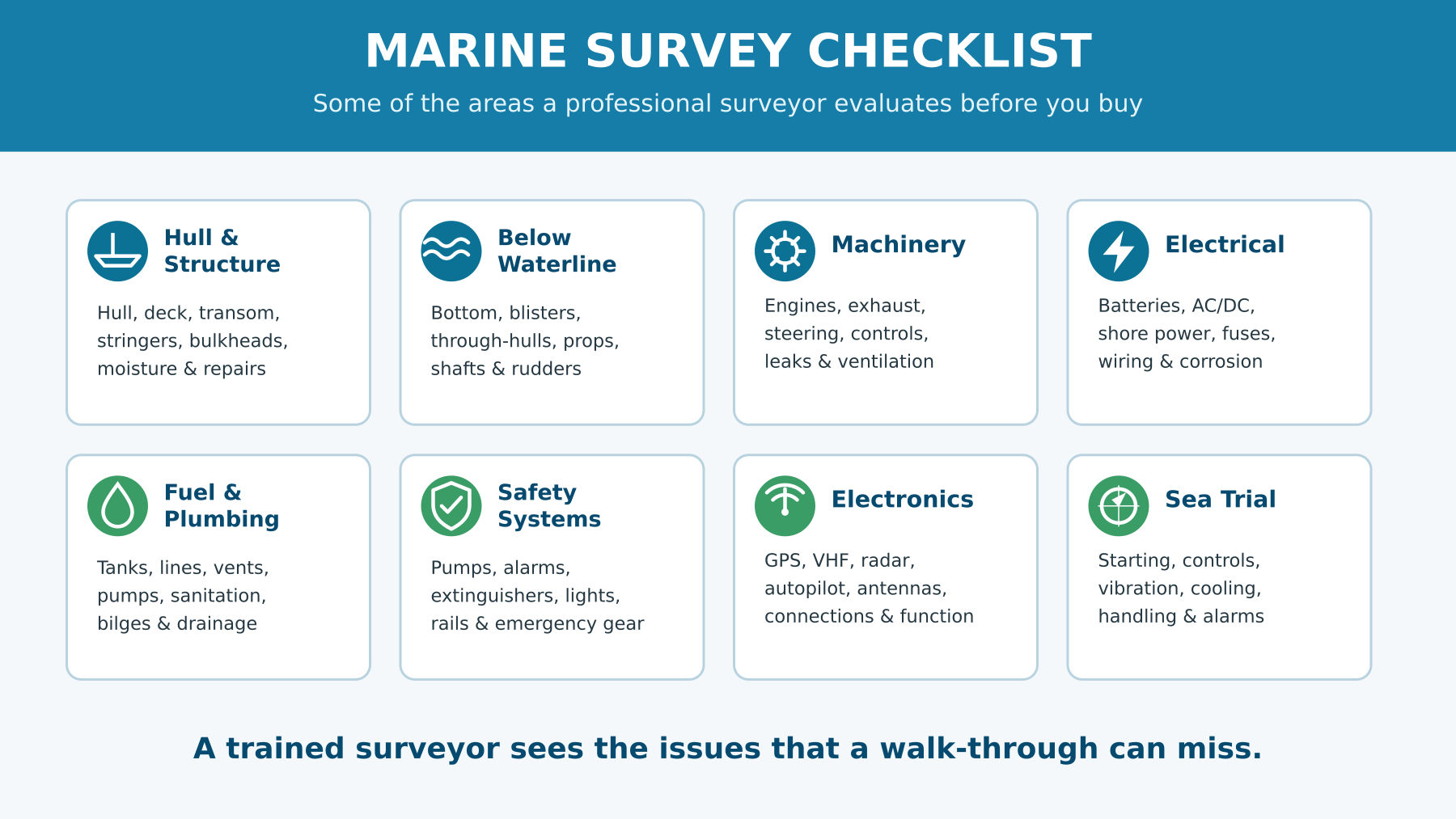
The Major Areas of a Marine Survey
Every vessel is different, but a professional pre-purchase survey commonly reviews these critical areas. Findings may also indicate the need for a specialist engine inspection, haul-out, or sea trial.
1Hull & Structure
The hull, deck, transom, stringers, bulkheads, hatches, and accessible supports are examined for overall condition and signs of damage.
- Cracks, impact damage, and repairs
- Soft deck areas and loose hardware
- Water intrusion, staining, and delamination
2Below the Waterline
A haul-out makes it possible to inspect areas that cannot be properly evaluated while the boat is in the water.
- Bottom condition, blisters, and paint
- Propellers, shafts, struts, and rudders
- Through-hulls, seacocks, and transducers
3Engines & Propulsion
Accessible propulsion machinery and its installation are reviewed for condition, leaks, proper support, and visible concerns.
- Engine mounts, belts, hoses, wiring, and fluids
- Exhaust, cooling, steering, and controls
- Fuel-system components and ventilation
4Electrical Systems
Marine electrical faults can create fire, shock, and reliability risks, making a careful review especially important.
- Batteries, restraints, terminals, and switches
- AC shore power, panels, chargers, and breakers
- Fusing, wire support, chafe protection, and corrosion
5Fuel, Plumbing & Bilge
Accessible tanks, hoses, pumps, fittings, drainage, and sanitation components are checked for apparent condition and safety concerns.
- Fuel tanks, fills, vents, lines, and filters
- Freshwater, sanitation, and discharge systems
- Bilges, pumps, drainage paths, and staining
6Safety Equipment
Safety items are reviewed for condition, accessibility, and appropriate installation for the boat’s intended use.
- Bilge pumps, alarms, lights, and ventilation
- Fire extinguishers and emergency shutoffs
- Rails, ladders, hatches, and safe egress
7Electronics & Navigation
When possible, installed electronics are operated and their accessible wiring, mounting, and overall installation are reviewed.
- GPS, chartplotter, radar, VHF, AIS, and autopilot
- Antennas, connectors, wiring, and fuses
- Helm controls and navigation-light operation
8Sea Trial Performance
A sea trial reveals conditions that a dockside inspection cannot, including handling, vibration, cooling, and control concerns.
- Starting, shifting, steering, and acceleration
- Temperatures, charging, gauges, and alarms
- Vibration, smoke, trim, and hull performance
Why a DIY Boat Inspection Is Not Enough
Anyone can spot obvious damage. The real value of a professional survey is recognizing the less obvious conditions that affect safety, insurance, value, and your negotiating position. A qualified surveyor brings an objective process, knowledge of common vessel failure patterns, specialized tools, and an understanding of accepted marine construction and safety practices.
Just as importantly, the surveyor documents which findings are material, which ones require further testing, and which specialists should be involved before you close on the purchase.
Know What You Are Buying
A careful pre-purchase marine survey gives you a clearer understanding of a vessel’s condition before it becomes your investment—and your responsibility.
